PTHLH Related Diseases

Related Diseases
1) Pre-eclampsia
Pre-Eclampsia, also known as preeclampsia, is related to severe pre-eclampsia and eclampsia, and has symptoms including edema, hyperemesis gravidarum and morning sickness. An important gene associated with Pre-Eclampsia is PEE1 (Preeclampsia/Eclampsia 1), and among its related pathways/superpathways are Angiogenesis (CST) and Angiogenesis (WikiPathways). The drugs Azithromycin and Levobupivacaine have been mentioned in the context of this disorder. Affiliated tissues include placenta, kidney and liver, and related phenotypes are hypertension and proteinuria
2) Acute Lymphocytic Leukemia
Leukemia, Acute Lymphoblastic, also known as acute lymphoblastic leukemia, is related to b-lymphoblastic leukemia/lymphoma and hematologic cancer, and has symptoms including angina pectoris, chest pain and edema. An important gene associated with Leukemia, Acute Lymphoblastic is PAX5 (Paired Box 5), and among its related pathways/superpathways are Cell differentiation - expanded index and miRNAs involvement in the immune response in sepsis. The drugs Epirubicin and Nicotine have been mentioned in the context of this disorder. Affiliated tissues include Blood, and related phenotype is acute lymphoblastic leukemia.
3) Cancer, Breast
Breast Cancer, also known as breast carcinoma, is related to ovarian cancer and hereditary breast ovarian cancer syndrome, and has symptoms including pelvic pain, lameness, animal and pain. An important gene associated with Breast Cancer is BRCA2 (BRCA2 DNA Repair Associated), and among its related pathways/superpathways are Gene expression (Transcription) and ERK Signaling. The drugs Prednisolone phosphate and Prednisolone acetate have been mentioned in the context of this disorder. Affiliated tissues include breast, lymph node and prostate, and related phenotypes are breast carcinoma and Decreased viability
4) Brachydactyly
Brachydactyly is related to hypertension and brachydactyly syndrome and brachydactyly, type a2. An important gene associated with Brachydactyly is GNAS (GNAS Complex Locus), and among its related pathways/superpathways are Signal Transduction and Endochondral ossification. Affiliated tissues include heart, bone and nk cells, and related phenotypes are growth/size/body region and homeostasis/metabolism
5) Hypercalcemia
Hypercalcemia, Infantile, 1, also known as infantile hypercalcemia, is related to idiopathic infantile hypercalcemia and hypocalciuric hypercalcemia, familial, type i. An important gene associated with Hypercalcemia, Infantile, 1 is CYP24A1 (Cytochrome P450 Family 24 Subfamily A Member 1), and among its related pathways/superpathways are GPCR downstream signalling and Class A/1 (Rhodopsin-like receptors). The drugs Salmon calcitonin and Cholecalciferol have been mentioned in the context of this disorder. Affiliated tissues include bone, kidney and heart, and related phenotypes are nephrolithiasis and intellectual disability
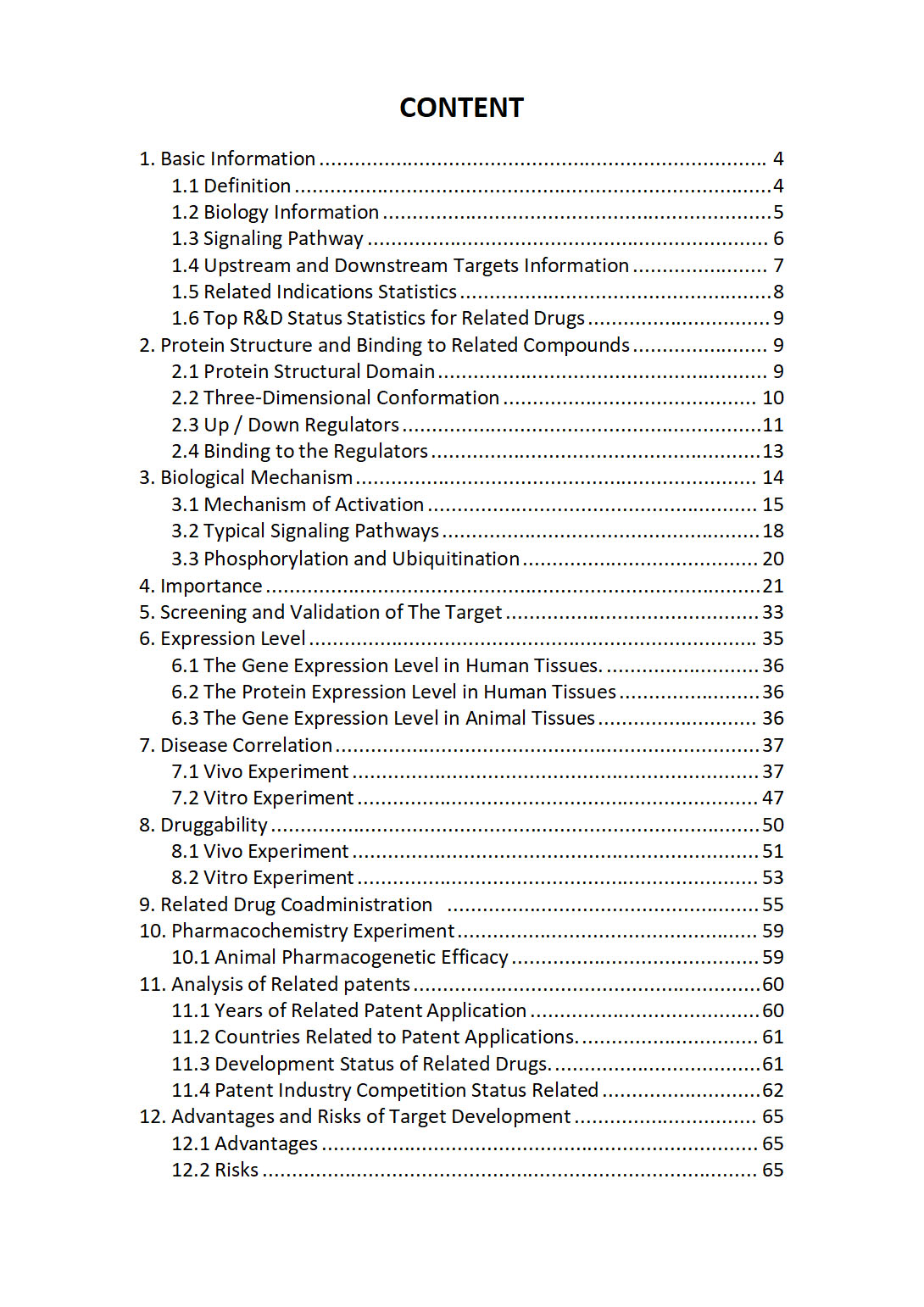
The "PTHLH Target / Biomarker Review Report" is a customizable review of hundreds up to thousends of related scientific research literature by AI technology, covering specific information about PTHLH comprehensively including but not limited to:
• general information;
• protein structure and compound binding;
• protein biological mechanisms;
• its importance;
• the target screening and validation;
• expression level;
• disease relevance;
• drug resistance;
• related combination drugs;
• pharmacochemistry experiments;
• related patent analysis;
• advantages and risks of development, etc.
The report is helpful for project application, drug molecule design, research progress updates, publication of research papers, patent applications, etc. If you are interested to get a full version of this report, please feel free to contact us at BD@bio.cacnex.com.
More Common Targets
11beta-Hydroxysteroid Dehydrogenase | 14-3-3 Protein | 15-Lipoxygenase | 17-beta-Hydroxysteroid dehydrogenase | 28S ribosomal subunit, mitochondrial | 3-Ketoacyl-CoA Thiolase (3-KAT) | 39S ribosomal subunit, mitochondrial | 4EHP-GYF2 complex | 5-Hydroxytryptamine Receptor | 5-Hydroxytryptamine Receptor 1 (5-HT1) | 5-Hydroxytryptamine Receptor 2 (5-HT2) | 60S Ribosome | 9-1-1 cell-cycle checkpoint response complex | A-Kinase Anchor Proteins | A1BG | A1BG-AS1 | A1CF | A2M | A2M-AS1 | A2ML1 | A2MP1 | A3GALT2 | A4GALT | A4GNT | AAAS | AACS | AACSP1 | AADAC | AADACL2 | AADACL2-AS1 | AADACL3 | AADACL4 | AADACP1 | AADAT | AAGAB | AAK1 | AAMDC | AAMP | AANAT | AAR2 | AARD | AARS1 | AARS2 | AARSD1 | AASDH | AASDHPPT | AASS | AATBC | AATF | AATK | ABALON | ABAT | ABCA1 | ABCA10 | ABCA11P | ABCA12 | ABCA13 | ABCA17P | ABCA2 | ABCA3 | ABCA4 | ABCA5 | ABCA6 | ABCA7 | ABCA8 | ABCA9 | ABCB1 | ABCB10 | ABCB11 | ABCB4 | ABCB5 | ABCB6 | ABCB7 | ABCB8 | ABCB9 | ABCC1 | ABCC10 | ABCC11 | ABCC12 | ABCC13 | ABCC2 | ABCC3 | ABCC4 | ABCC5 | ABCC6 | ABCC6P1 | ABCC6P2 | ABCC8 | ABCC9 | ABCD1 | ABCD2 | ABCD3 | ABCD4 | ABCE1 | ABCF1 | ABCF1-DT | ABCF2 | ABCF3 | ABCG1 | ABCG2

CONTACT
BD@bio.cacnex.com
2026© Cacnex Consulting Ltd. All Rights Reserved
