DNA Methyltransferase (DNMT) (nonspecified subtype) Related Diseases

Related Diseases
1) Filariasis
Filarial Elephantiasis, also known as lymphatic filariasis, is related to loiasis and onchocerciasis, and has symptoms including chyluria An important gene associated with Filarial Elephantiasis is IL10 (Interleukin 10), and among its related pathways/superpathways are Akt Signaling and Overview of interferons-mediated signaling pathway. The drugs Doxycycline and Petrolatum have been mentioned in the context of this disorder. Affiliated tissues include skin, lung and testis, and related phenotypes are lymphadenopathy and predominantly lower limb lymphedema
2) Paraganglioma
Hereditary Paraganglioma-Pheochromocytoma Syndromes, also known as hereditary pheochromocytoma-paraganglioma, is related to paragangliomas 1 and sporadic pheochromocytoma/secreting paraganglioma, and has symptoms including aphonia An important gene associated with Hereditary Paraganglioma-Pheochromocytoma Syndromes is MAX (MYC Associated Factor X), and among its related pathways/superpathways are Metabolism and "Respiratory electron transport, ATP synthesis by chemiosmotic coupling, and heat production by uncoupling proteins.". The drugs Doxazosin and Phenoxybenzamine have been mentioned in the context of this disorder. Affiliated tissues include adrenal gland, thyroid and kidney, and related phenotypes are extraadrenal pheochromocytoma and adrenal pheochromocytoma
3) Atherosclerosis
Atherosclerosis Susceptibility, also known as atherosclerosis, is related to cerebral atherosclerosis and generalized atherosclerosis, and has symptoms including angina pectoris, chest pain and edema. An important gene associated with Atherosclerosis Susceptibility is ATHS (Atherosclerosis Susceptibility (Lipoprotein Associated)), and among its related pathways/superpathways are "Plasma lipoprotein assembly, remodeling, and clearance" and Interleukin-4 and Interleukin-13 signaling. The drugs Enalaprilat and Enalapril have been mentioned in the context of this disorder. Affiliated tissues include Heart, and related phenotypes are hypertriglyceridemia and myocardial infarction
4) Pheochromocytoma
Adrenal Gland Pheochromocytoma, also known as pheochromocytoma, is related to malignant childhood adrenal gland pheochromocytoma and pheochromocytoma, and has symptoms including abdominal pain, chest pain and fever. An important gene associated with Adrenal Gland Pheochromocytoma is NGF (Nerve Growth Factor), and among its related pathways/superpathways are Cytoskeleton remodeling Regulation of actin cytoskeleton by Rho GTPases and Prader-Willi and Angelman syndrome. The drugs Ifosfamide and Lenograstim have been mentioned in the context of this disorder. Affiliated tissues include adrenal gland, thymus and thyroid.
5) Thalassemia
Alpha-Thalassemia, also known as alpha thalassemia, is related to hemoglobin h disease and alpha thalassemia-intellectual disability syndrome type 1, and has symptoms including angina pectoris, chest pain and edema. An important gene associated with Alpha-Thalassemia is HBA2 (Hemoglobin Subunit Alpha 2), and among its related pathways/superpathways are Glucose / Energy Metabolism and Binding and Uptake of Ligands by Scavenger Receptors. The drugs Metformin and Peginterferon alfa-2b have been mentioned in the context of this disorder. Affiliated tissues include bone, spleen and liver, and related phenotypes are microcytic anemia and abnormal hemoglobin
6) Peripheral T-cell Lymphoma
Peripheral T-Cell Lymphoma, also known as lymphoma t-cell peripheral, is related to angioimmunoblastic t-cell lymphoma and burkitt lymphoma, and has symptoms including pruritus An important gene associated with Peripheral T-Cell Lymphoma is TNFRSF8 (TNF Receptor Superfamily Member 8), and among its related pathways/superpathways are ERK Signaling and Signal Transduction. The drugs Coenzyme M and Denileukin diftitox have been mentioned in the context of this disorder. Affiliated tissues include bone marrow, thymus and t cells, and related phenotypes are no effect and no effect
7) Multiple Myeloma
Myeloma, Multiple, also known as multiple myeloma, is related to monoclonal gammopathy of uncertain significance and plasma cell neoplasm. An important gene associated with Myeloma, Multiple is LIG4 (DNA Ligase 4), and among its related pathways/superpathways are Breast cancer pathway and MAPK Signaling: Mitogens. The drugs Busulfan and Levofloxacin have been mentioned in the context of this disorder. Affiliated tissues include Blood, and related phenotypes are osteopenia and pathologic fracture
8) Parkinson's Disease
Parkinson Disease, Late-Onset, also known as parkinson disease, is related to hereditary late-onset parkinson disease and parkinson disease 3, autosomal dominant, and has symptoms including angina pectoris, back pain and headache. An important gene associated with Parkinson Disease, Late-Onset is MAPT (Microtubule Associated Protein Tau), and among its related pathways/superpathways is Parkinson's disease pathway. The drugs Idebenone and Tadalafil have been mentioned in the context of this disorder. Affiliated tissues include Brain, and related phenotypes are hallucinations and abnormal autonomic nervous system physiology
9) Juvenile Myelomonocytic Leukemia
Juvenile Myelomonocytic Leukemia, also known as leukemia, juvenile myelomonocytic, is related to noonan syndrome-like disorder with or without juvenile myelomonocytic leukemia and noonan syndrome 3, and has symptoms including exanthema, fatigue and fever. An important gene associated with Juvenile Myelomonocytic Leukemia is PTPN11 (Protein Tyrosine Phosphatase Non-Receptor Type 11), and among its related pathways/superpathways are ERK Signaling and Disease. The drugs homoharringtonine and Aldesleukin have been mentioned in the context of this disorder. Affiliated tissues include bone marrow, myeloid and bone, and related phenotypes are juvenile myelomonocytic leukemia and Decreased viability
10) Acute Lymphocytic Leukemia
Leukemia, Acute Lymphoblastic, also known as acute lymphoblastic leukemia, is related to b-lymphoblastic leukemia/lymphoma and hematologic cancer, and has symptoms including angina pectoris, chest pain and edema. An important gene associated with Leukemia, Acute Lymphoblastic is PAX5 (Paired Box 5), and among its related pathways/superpathways are Cell differentiation - expanded index and miRNAs involvement in the immune response in sepsis. The drugs Epirubicin and Nicotine have been mentioned in the context of this disorder. Affiliated tissues include Blood, and related phenotype is acute lymphoblastic leukemia.
11) Acute Myeloid Leukemia
Acute Myeloblastic Leukemia with Maturation, also known as acute myeloblastic leukemia type 2, is related to myeloid leukemia and myeloid sarcoma. An important gene associated with Acute Myeloblastic Leukemia with Maturation is MIR181A1HG (MIR181A1 Host Gene), and among its related pathways/superpathways are Ras signaling and Hematopoietic Stem Cells and Lineage-specific Markers. The drugs Nicotine and Amsacrine have been mentioned in the context of this disorder. Affiliated tissues include myeloid, bone marrow and t cells, and related phenotypes are Decreased substrate adherent cell growth and Decreased substrate adherent cell growth
12) Malignant Peripheral Nerve Sheath Tumor
Malignant Peripheral Nerve Sheath Tumor, also known as malignant neurilemmoma, is related to malignant triton tumor and epithelioid malignant peripheral nerve sheath tumor. An important gene associated with Malignant Peripheral Nerve Sheath Tumor is NF1 (Neurofibromin 1), and among its related pathways/superpathways are Apoptotic Pathways in Synovial Fibroblasts and Disease. The drugs Doxorubicin and Cyclophosphamide have been mentioned in the context of this disorder. Affiliated tissues include lung, t cells and small intestine, and related phenotypes are Increased shRNA abundance (Z-score > 2) and Increased shRNA abundance (Z-score > 2)
13) Chronic Lymphocytic Leukemia
Leukemia, Chronic Lymphocytic 2, also known as leukemia, chronic lymphocytic, susceptibility to, 2, is related to chronic lymphocytic leukemia/small lymphocytic lymphoma and chromosomal triplication, and has symptoms including angina pectoris, chest pain and edema. An important gene associated with Leukemia, Chronic Lymphocytic 2 is CLLS2 (Disrupted In B-Cell Neoplasia), and among its related pathways/superpathways are Hematopoietic Stem Cells and Lineage-specific Markers and Interleukin-4 and Interleukin-13 signaling. The drugs Valganciclovir and Chlorambucil have been mentioned in the context of this disorder. Affiliated tissues include t cells, bone marrow and b cells, and related phenotypes are chronic lymphatic leukemia and immune system
14) Chronic Idiopathic Myelofibrosis
Myelofibrosis, also known as primary myelofibrosis, is related to acute megakaryocytic leukemia and thrombocytosis. An important gene associated with Myelofibrosis is MPL (MPL Proto-Oncogene, Thrombopoietin Receptor), and among its related pathways/superpathways are TGF-Beta Pathway and Response to elevated platelet cytosolic Ca2+. The drugs Panobinostat and Lactitol have been mentioned in the context of this disorder. Affiliated tissues include bone marrow, myeloid and bone, and related phenotypes are fatigue and anemia
15) Chronic Myelomonocytic Leukemia
Chronic Myelomonocytic Leukemia, also known as leukemia, myelomonocytic, chronic, is related to juvenile myelomonocytic leukemia and myelodysplastic syndrome, and has symptoms including fatigue, fever and night sweats. An important gene associated with Chronic Myelomonocytic Leukemia is ETV6 (ETS Variant Transcription Factor 6), and among its related pathways/superpathways are Disease and Akt Signaling. The drugs homoharringtonine and Daunorubicin have been mentioned in the context of this disorder. Affiliated tissues include bone marrow, myeloid and monocytes, and related phenotypes are Increased shRNA abundance (Z-score > 2) and Increased shRNA abundance (Z-score > 2)
16) Chronic Myeloid Leukemia
Leukemia, Chronic Myeloid, also known as chronic myelogenous leukemia, is related to atypical chronic myeloid leukemia, bcr-abl1 negative and juvenile myelomonocytic leukemia, and has symptoms including angina pectoris, chest pain and edema. An important gene associated with Leukemia, Chronic Myeloid is ABL1 (ABL Proto-Oncogene 1, Non-Receptor Tyrosine Kinase), and among its related pathways/superpathways are Overview of interferons-mediated signaling pathway and VEGF Pathway (Tocris). The drugs Benzocaine and Tannic acid have been mentioned in the context of this disorder. Affiliated tissues include myeloid, bone marrow and bone, and related phenotypes are myeloproliferative disorder and splenomegaly
17) Chronic Kidney Disease
Chronic Kidney Disease, also known as chronic renal disease, is related to kidney disease and end stage renal disease, and has symptoms including cloudy (hemodialysis) (peritoneal) dialysis effluent An important gene associated with Chronic Kidney Disease is COL4A4 (Collagen Type IV Alpha 4 Chain), and among its related pathways/superpathways are Signal Transduction and Primary focal segmental glomerulosclerosis (FSGS). The drugs Chlorhexidine and Fosinopril have been mentioned in the context of this disorder. Affiliated tissues include Bone and Adipose, and related phenotypes are homeostasis/metabolism and renal/urinary system
18) Lymphoma, B-cell
B-Cell Lymphoma, also known as lymphoma, b-cell, is related to marginal zone b-cell lymphoma and lymphoma, mucosa-associated lymphoid type. An important gene associated with B-Cell Lymphoma is MIR17 (MicroRNA 17), and among its related pathways/superpathways are Cytokine Signaling in Immune system and NF-kappaB Signaling. The drugs Lomustine and Rivoceranib have been mentioned in the context of this disorder. Affiliated tissues include t cells, b cells and bone marrow, and related phenotypes are endocrine/exocrine gland and cellular
19) Lymphoma, Follicular
Follicular Lymphoma, also known as lymphoma, follicular, is related to lymphoma and burkitt lymphoma. An important gene associated with Follicular Lymphoma is BCL10 (BCL10 Immune Signaling Adaptor), and among its related pathways/superpathways are Interleukin-4 and Interleukin-13 signaling and DNA damage response (only ATM dependent). The drugs Protective Agents and Neuroprotective Agents have been mentioned in the context of this disorder. Affiliated tissues include b cells, t cells and bone marrow, and related phenotypes are fever and lymphoma
20) Cancer, Breast
Breast Cancer, also known as breast carcinoma, is related to ovarian cancer and hereditary breast ovarian cancer syndrome, and has symptoms including pelvic pain, lameness, animal and pain. An important gene associated with Breast Cancer is BRCA2 (BRCA2 DNA Repair Associated), and among its related pathways/superpathways are Gene expression (Transcription) and ERK Signaling. The drugs Prednisolone phosphate and Prednisolone acetate have been mentioned in the context of this disorder. Affiliated tissues include breast, lymph node and prostate, and related phenotypes are breast carcinoma and Decreased viability
21) Cancer, Prostate
Prostate Cancer, also known as prostate carcinoma, is related to breast cancer and prostate disease, and has symptoms including angina pectoris, tremor and equilibration disorder. An important gene associated with Prostate Cancer is CHEK2 (Checkpoint Kinase 2), and among its related pathways/superpathways are Endometrial cancer and Breast cancer pathway. The drugs Sodium citrate and Sildenafil have been mentioned in the context of this disorder. Affiliated tissues include prostate, bone and lymph node, and related phenotypes are prostate cancer and neoplasm
22) Cancer, Brain
Brain Cancer, also known as malignant neoplasm of brain, is related to li-fraumeni syndrome and lung cancer, and has symptoms including back pain, headache and pain. An important gene associated with Brain Cancer is MIR142 (MicroRNA 142), and among its related pathways/superpathways are ERK Signaling and Signal Transduction. The drugs Fentanyl and Dexmedetomidine have been mentioned in the context of this disorder. Affiliated tissues include brain, breast and lung, and related phenotypes are Increased shRNA abundance (Z-score > 2) and Increased shRNA abundance (Z-score > 2)
23) Cancer, Kidney
Kidney Cancer, also known as renal cancer, is related to renal cell carcinoma, nonpapillary and wilms tumor 1, and has symptoms including flank pain An important gene associated with Kidney Cancer is HOTAIR (HOX Transcript Antisense RNA), and among its related pathways/superpathways are miRNAs involvement in the immune response in sepsis and miRNAs involved in DNA damage response. The drugs Ropivacaine and Bupivacaine have been mentioned in the context of this disorder. Affiliated tissues include kidney, brain and endothelial.
24) Cancer, Bladder
Bladder Cancer, also known as urinary bladder cancer, is related to bladder urothelial carcinoma and costello syndrome. An important gene associated with Bladder Cancer is FGFR3 (Fibroblast Growth Factor Receptor 3), and among its related pathways/superpathways are Breast cancer pathway and MAPK Signaling: Mitogens. The drugs Tamsulosin and Lidocaine have been mentioned in the context of this disorder. Affiliated tissues include urinary bladder, lymph node and prostate, and related phenotypes are transitional cell carcinoma of the bladder and bladder neoplasm
25) Leukemia
Leukemia, also known as leukaemia, unspecified, without mention of remission, is related to myeloid leukemia and leukemia, chronic myeloid, and has symptoms including angina pectoris, chest pain and edema. An important gene associated with Leukemia is MIR27A (MicroRNA 27a), and among its related pathways/superpathways are NF-kappaB Signaling and Imatinib and chronic myeloid leukemia. The drugs Azacitidine and Decitabine have been mentioned in the context of this disorder. Affiliated tissues include myeloid, bone marrow and t cells, and related phenotypes are Increased HDAC inhibitor resistance and endocrine/exocrine gland
26) Glioma
Glial Tumor, also known as glioma, is related to optic nerve glioma and brain stem glioma. The drugs Trametinib and Dabrafenib have been mentioned in the context of this disorder. Affiliated tissues include brain, t cells and bone marrow.
27) Rheumatoid Arthritis
Rheumatoid Arthritis, also known as ra, is related to arthritis and psoriatic arthritis, and has symptoms including back pain, muscle cramp and sciatica. An important gene associated with Rheumatoid Arthritis is PTPN22 (Protein Tyrosine Phosphatase Non-Receptor Type 22), and among its related pathways/superpathways are NF-kappaB Signaling and Genes associated with the development of rheumatoid arthritis. The drugs Entecavir and Alendronic acid have been mentioned in the context of this disorder. Affiliated tissues include Cartilage, joint and bone, and related phenotypes are joint stiffness and fatigue
28) Myeloid Leukemia
Myeloid Leukemia, also known as myeloid leukaemia, is related to leukemia, acute myeloid and leukemia, chronic myeloid. An important gene associated with Myeloid Leukemia is MIR99AHG (Mir-99a-Let-7c Cluster Host Gene), and among its related pathways/superpathways are HIF-1-alpha transcription factor network and Wnt/beta-catenin signaling pathway in leukemia. The drugs Nicotine and Mitoxantrone have been mentioned in the context of this disorder. Affiliated tissues include myeloid tissue, myeloid and bone marrow, and related phenotypes are Increased shRNA abundance (Z-score > 2) and Increased shRNA abundance (Z-score > 2)
29) Fibrosis
Fibrosis of Extraocular Muscles, Congenital, 1, also known as fibrosis of extraocular muscles, congenital, 3b, is related to moebius syndrome and fibrosis of extraocular muscles, congenital, 2, and has symptoms including cachexia, cyanosis and dyspnea. An important gene associated with Fibrosis of Extraocular Muscles, Congenital, 1 is KIF21A (Kinesin Family Member 21A), and among its related pathways/superpathways are Class I MHC mediated antigen processing and presentation and Vesicle-mediated transport. The drugs Angiotensin II and Losartan have been mentioned in the context of this disorder. Affiliated tissues include liver, eye and bone marrow, and related phenotypes are esotropia and exotropia
30) Sarcoma
Malignant Mesenchymoma, also known as malignant mesenchymal tumor, is related to gallbladder sarcoma and leiomyosarcoma. An important gene associated with Malignant Mesenchymoma is SERPINA3 (Serpin Family A Member 3), and among its related pathways/superpathways are Mesenchymal Stem Cells and Lineage-specific Markers and Myogenesis. The drugs Ritonavir and Lopinavir have been mentioned in the context of this disorder. Affiliated tissues include t cells, uterus and bone, and related phenotype is muscle.
31) Lung Diseases
Lung Disease, also known as lung diseases, is related to interstitial lung disease and interstitial lung disease 2, and has symptoms including apnea, coughing and dyspnea. An important gene associated with Lung Disease is SFTPC (Surfactant Protein C), and among its related pathways/superpathways are Metabolism of proteins and Innate Immune System. The drugs Guaifenesin and Cathine have been mentioned in the context of this disorder. Affiliated tissues include lung, bone marrow and heart, and related phenotypes are homeostasis/metabolism and immune system
32) Autoimmune Disease
Autoimmune Disease, also known as autoimmune diseases, is related to vitiligo-associated multiple autoimmune disease susceptibility 1 and systemic lupus erythematosus. An important gene associated with Autoimmune Disease is AIS4 (Autoimmune Disease, Susceptibility To, 4), and among its related pathways/superpathways are Innate Immune System and MIF Mediated Glucocorticoid Regulation. The drugs Sofosbuvir and Ledipasvir have been mentioned in the context of this disorder. Affiliated tissues include t cells, bone marrow and skin, and related phenotypes are autoimmune antibody positivity and endocrine/exocrine gland
33) Thrombocytopenia
Thrombocytopenia, also known as platelet dysfunction nos, is related to thrombocytopenia due to platelet alloimmunization and amegakaryocytic thrombocytopenia, congenital. An important gene associated with Thrombocytopenia is WAS (WASP Actin Nucleation Promoting Factor), and among its related pathways/superpathways are Response to elevated platelet cytosolic Ca2+ and NF-kappaB Signaling. The drugs Certoparin and Clarithromycin have been mentioned in the context of this disorder. Affiliated tissues include bone marrow, bone and liver, and related phenotypes are homeostasis/metabolism and cellular
34) Angioimmunoblastic T-cell Lymphoma
Angioimmunoblastic T-Cell Lymphoma, also known as immunoblastic lymphadenopathy, is related to burkitt lymphoma and exanthem, and has symptoms including exanthema An important gene associated with Angioimmunoblastic T-Cell Lymphoma is CXCL13 (C-X-C Motif Chemokine Ligand 13), and among its related pathways/superpathways are Akt Signaling and PAK Pathway. The drugs Pirarubicin and Alemtuzumab have been mentioned in the context of this disorder. Affiliated tissues include bone marrow, lymph node and endothelial, and related phenotypes are immune system and normal
35) Sickle Cell Anemia
Sickle Cell Anemia, also known as hemoglobin sc disease, is related to hereditary persistence of fetal hemoglobin-sickle cell disease syndrome and deficiency anemia, and has symptoms including abdominal pain, angina pectoris and chest pain. An important gene associated with Sickle Cell Anemia is HBB (Hemoglobin Subunit Beta), and among its related pathways/superpathways are Golgi-to-ER retrograde transport and Binding and Uptake of Ligands by Scavenger Receptors. The drugs Deferoxamine and Tocopherol have been mentioned in the context of this disorder. Affiliated tissues include Blood, bone marrow and bone, and related phenotypes are chronic hemolytic anemia and recurrent infections
36) Sickle Cell Disease
Sickle Cell Anemia, also known as hemoglobin sc disease, is related to hereditary persistence of fetal hemoglobin-sickle cell disease syndrome and deficiency anemia, and has symptoms including abdominal pain, angina pectoris and chest pain. An important gene associated with Sickle Cell Anemia is HBB (Hemoglobin Subunit Beta), and among its related pathways/superpathways are Golgi-to-ER retrograde transport and Binding and Uptake of Ligands by Scavenger Receptors. The drugs Deferoxamine and Tocopherol have been mentioned in the context of this disorder. Affiliated tissues include Blood, bone marrow and bone, and related phenotypes are chronic hemolytic anemia and recurrent infections
37) Mesothelioma, Malignant
Mesothelioma, Malignant, also known as malignant mesothelioma, is related to malignant pleural mesothelioma and peritoneal mesothelioma, and has symptoms including chest pain, dyspnea and fatigue. An important gene associated with Mesothelioma, Malignant is BCL10 (BCL10 Immune Signaling Adaptor), and among its related pathways/superpathways is Cytoskeletal Signaling. The drugs Dexamethasone acetate and Dexamethasone have been mentioned in the context of this disorder. Affiliated tissues include lung, testis and t cells, and related phenotypes are pleural effusion and cough
38) Non-Hodgkin Lymphoma
Lymphoma, also known as non-hodgkin malignant lymphoma nos, is related to lymphoma, hodgkin, classic and lymphoma, non-hodgkin, familial. An important gene associated with Lymphoma is PTPN11 (Protein Tyrosine Phosphatase Non-Receptor Type 11), and among its related pathways/superpathways are IL-9 Signaling Pathways and NF-kappaB Signaling. The drugs Ferrous succinate and Posaconazole have been mentioned in the context of this disorder. Affiliated tissues include t cells, bone marrow and myeloid, and related phenotypes are immune system and hematopoietic system
39) Myelodysplasia
Myelodysplastic Syndrome, also known as myelodysplastic syndromes, is related to leukemia, acute myeloid and juvenile myelomonocytic leukemia. An important gene associated with Myelodysplastic Syndrome is TET2 (Tet Methylcytosine Dioxygenase 2), and among its related pathways/superpathways is Embryonic and Induced Pluripotent Stem Cells and Lineage-specific Markers. The drugs Posaconazole and Micafungin have been mentioned in the context of this disorder. Affiliated tissues include Placenta and Umbilical Cord, and related phenotypes are myelodysplasia and neoplasm
40) Myelofibrosis
Myelofibrosis, also known as primary myelofibrosis, is related to acute megakaryocytic leukemia and thrombocytosis. An important gene associated with Myelofibrosis is MPL (MPL Proto-Oncogene, Thrombopoietin Receptor), and among its related pathways/superpathways are TGF-Beta Pathway and Response to elevated platelet cytosolic Ca2+. The drugs Panobinostat and Lactitol have been mentioned in the context of this disorder. Affiliated tissues include bone marrow, myeloid and bone, and related phenotypes are fatigue and anemia
41) Melanoma
Melanoma, also known as malignant melanoma, is related to skin melanoma and melanoma, cutaneous malignant 1, and has symptoms including exanthema and pruritus. An important gene associated with Melanoma is BRAF (B-Raf Proto-Oncogene, Serine/Threonine Kinase), and among its related pathways/superpathways are ERK Signaling and Signal Transduction. The drugs Vindesine and Triamcinolone have been mentioned in the context of this disorder. Affiliated tissues include skin, lymph node and t cells, and related phenotypes are normal and pigmentation
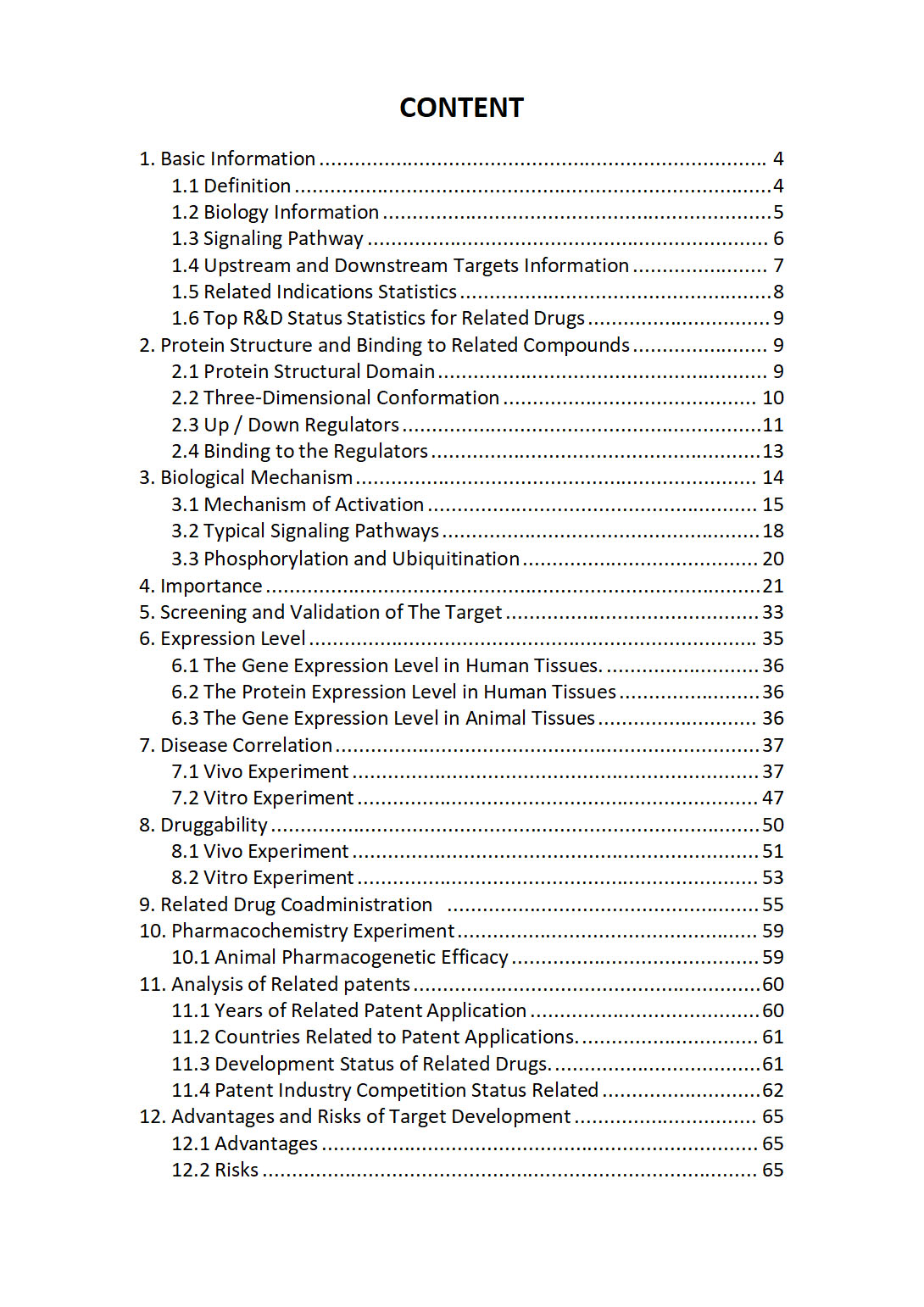
The "DNA Methyltransferase (DNMT) (nonspecified subtype) Target / Biomarker Review Report" is a customizable review of hundreds up to thousends of related scientific research literature by AI technology, covering specific information about DNA Methyltransferase (DNMT) (nonspecified subtype) comprehensively including but not limited to:
• general information;
• protein structure and compound binding;
• protein biological mechanisms;
• its importance;
• the target screening and validation;
• expression level;
• disease relevance;
• drug resistance;
• related combination drugs;
• pharmacochemistry experiments;
• related patent analysis;
• advantages and risks of development, etc.
The report is helpful for project application, drug molecule design, research progress updates, publication of research papers, patent applications, etc. If you are interested to get a full version of this report, please feel free to contact us at BD@bio.cacnex.com.
More Common Targets
11beta-Hydroxysteroid Dehydrogenase | 14-3-3 Protein | 15-Lipoxygenase | 17-beta-Hydroxysteroid dehydrogenase | 28S ribosomal subunit, mitochondrial | 3-Ketoacyl-CoA Thiolase (3-KAT) | 39S ribosomal subunit, mitochondrial | 4EHP-GYF2 complex | 5-Hydroxytryptamine Receptor | 5-Hydroxytryptamine Receptor 1 (5-HT1) | 5-Hydroxytryptamine Receptor 2 (5-HT2) | 60S Ribosome | 9-1-1 cell-cycle checkpoint response complex | A-Kinase Anchor Proteins | A1BG | A1BG-AS1 | A1CF | A2M | A2M-AS1 | A2ML1 | A2MP1 | A3GALT2 | A4GALT | A4GNT | AAAS | AACS | AACSP1 | AADAC | AADACL2 | AADACL2-AS1 | AADACL3 | AADACL4 | AADACP1 | AADAT | AAGAB | AAK1 | AAMDC | AAMP | AANAT | AAR2 | AARD | AARS1 | AARS2 | AARSD1 | AASDH | AASDHPPT | AASS | AATBC | AATF | AATK | ABALON | ABAT | ABCA1 | ABCA10 | ABCA11P | ABCA12 | ABCA13 | ABCA17P | ABCA2 | ABCA3 | ABCA4 | ABCA5 | ABCA6 | ABCA7 | ABCA8 | ABCA9 | ABCB1 | ABCB10 | ABCB11 | ABCB4 | ABCB5 | ABCB6 | ABCB7 | ABCB8 | ABCB9 | ABCC1 | ABCC10 | ABCC11 | ABCC12 | ABCC13 | ABCC2 | ABCC3 | ABCC4 | ABCC5 | ABCC6 | ABCC6P1 | ABCC6P2 | ABCC8 | ABCC9 | ABCD1 | ABCD2 | ABCD3 | ABCD4 | ABCE1 | ABCF1 | ABCF1-DT | ABCF2 | ABCF3 | ABCG1 | ABCG2

CONTACT
BD@bio.cacnex.com
2026© Cacnex Consulting Ltd. All Rights Reserved
